
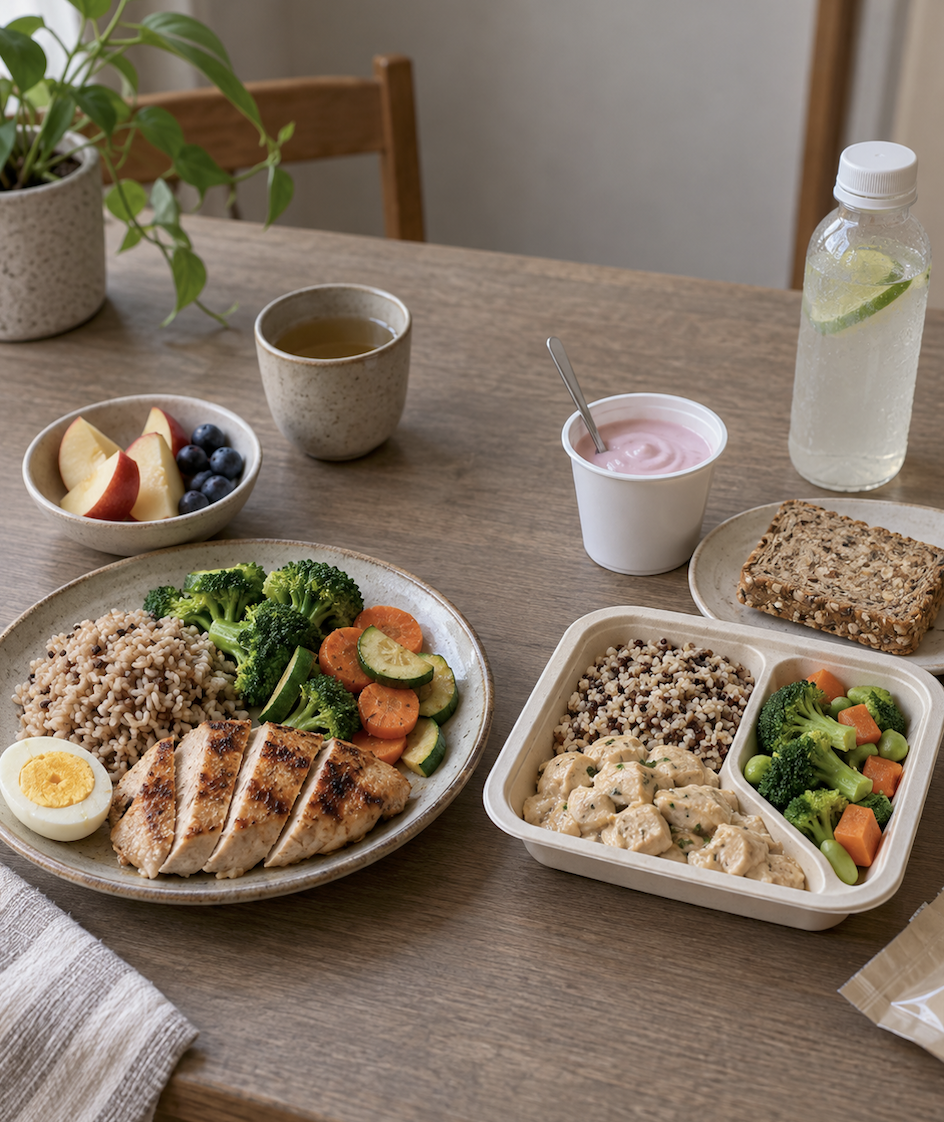
A 2025 Nature Medicine randomized trial suggests the answer may be yes.
The study followed 55 adults with overweight or obesity, who spent eight weeks on each of two diets designed to meet UK healthy-eating guidelines: one centered on minimally processed, whole foods, and the other on ultra-processed foods. Participants could eat as much as they wanted.
Both groups lost weight. But the whole-food group lost an average of 2.06% of body weight, compared with 1.05% in the ultra-processed group — nearly a twofold difference.
The point isn’t that ultra-processed foods are simply “bad.” Even when the overall nutrient profile meets dietary guidelines, food processing may influence how quickly we eat, how much we eat, and how easily we recognize when we’ve had enough.
So if you’re constantly counting calories but still find yourself hungry soon after eating, try changing the food before changing the numbers.
Start with the meals or snacks you eat most often — an instant breakfast, packaged snack, or ready-to-eat meal — and replace one of them with something closer to its original form and that takes more chewing.
You don’t need every meal to be perfect. Start with the one that tends to make it hardest to stop eating.
Because sometimes, it may not be a matter of willpower. The food itself may be influencing how full you feel — and when you realize you’ve had enough.
