
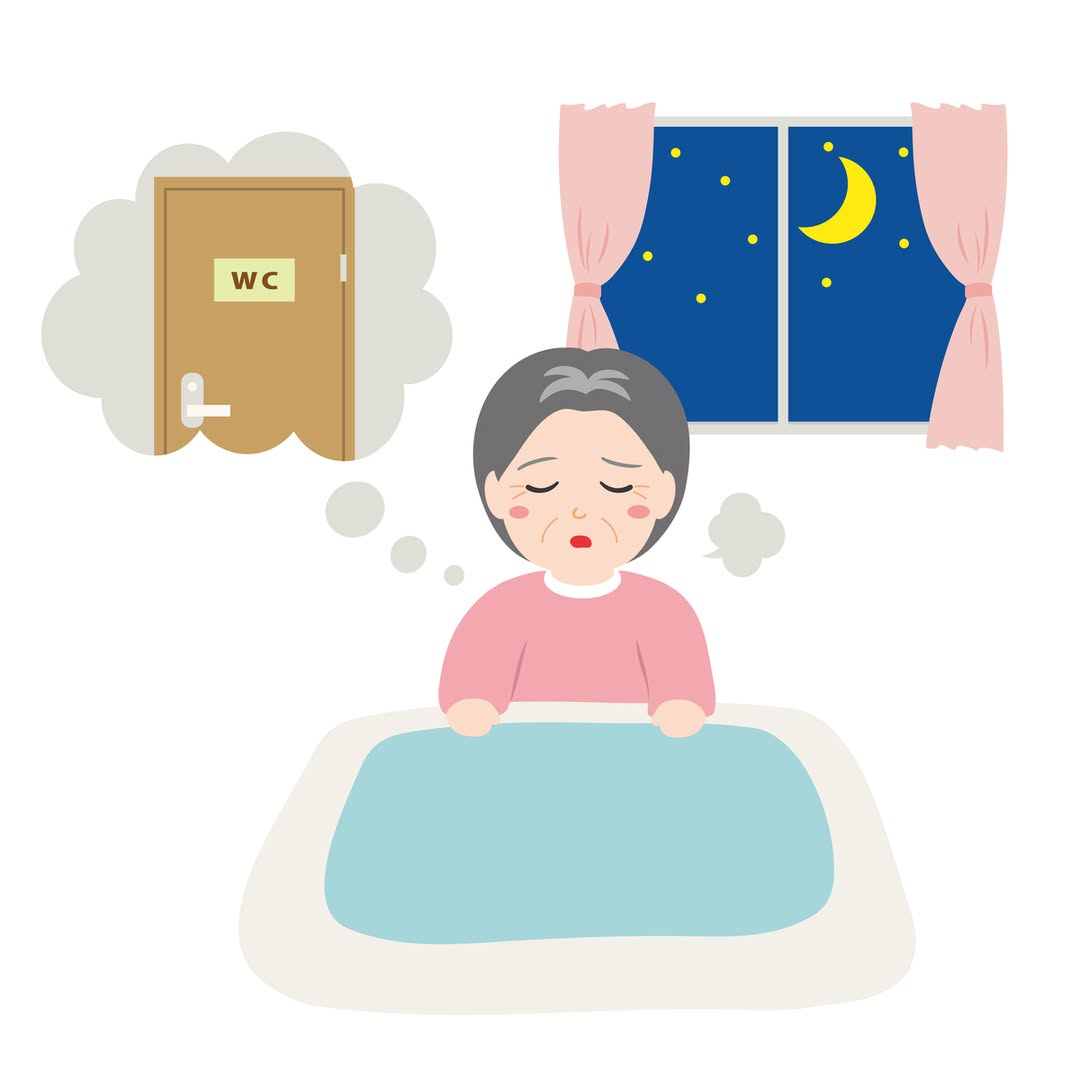
What Wakes You Up: Sunlight, Your Phone or the Need to Urinate?
Do you have a problem with nocturia? Often our gut reaction is that there is a problem with the urinary system and we seek help from a urologist.
Are you troubled by nocturia? If your urinary system is normal but you still can’t find the cause, you may have sleep apnea!
When Dr. Jeff was at the Hospital Affiliated to Harvard Medical School in the United States, he treated a mother-in-law who was referred from the urology department. She suffered from chronic sleep deprivation due to nocturia. Frequently getting up to go to the bathroom in the middle of the night was a big problem for the 80-year-old woman, who was also worried about the risk of falling. The sleep medicine center detected that my mother-in-law suffered from severe sleep apnea. She wore a positive pressure respirator to sleep, which greatly improved her sleep condition. She could sleep for 6-8 hours continuously every night and no longer had to interrupt her sleep to go to the toilet due to the urge to urinate. It can be said that sleep cured her nocturia problem.
It turns out that nocturia is also one of the symptoms of sleep apnea.
Nocturia and sleep apnea
When our bladder is full of urine, it will send a message to the brain to produce the "urinary urge" to make people want to go to the toilet. However, after falling asleep, the brain becomes less sensitive to these signals, unlike the urge to go to the toilet whenever there is urine during the day. But (this is the but), if you have a sleep disorder, it is difficult to enter deep sleep, your bladder is still as sensitive as during the day, and you have to get up every few hours to go to the toilet.
When we are sleeping, the brain has to receive signals from the bladder all the time, which will wake us up due to the need to urinate and have to get up to go to the toilet. It will take a while to fall asleep again and reach deep sleep. In the long run, lack of sleep will have serious consequences.
Especially when our body is asleep, it can secrete enough antidiuretic hormone. Once the secretion of antidiuretic hormone is insufficient, the urine cannot be effectively concentrated and reduced, which will cause polyuria at night. In addition, when the brain is repeatedly deprived of oxygen due to sleep apnea, circulation will be accelerated to make up for the lack of oxygen. The vascular resistance in the lungs will increase and atrial diuretic peptides will be secreted to produce a diuretic effect. The amount of urine production at night will increase, which will lead to frequent nocturia!
Do you often get up in the middle of the night to go to the bathroom? If so, avoid drinking a lot of water, coffee, tea and alcoholic beverages after dinner and before going to bed; be sure to empty your bladder before going to bed to reduce the need to go to the toilet at night. If you have ruled out urinary system diseases or are awakened by the urge to urinate, then don’t wait and come to Dr. Jeff to evaluate your sleep status!
